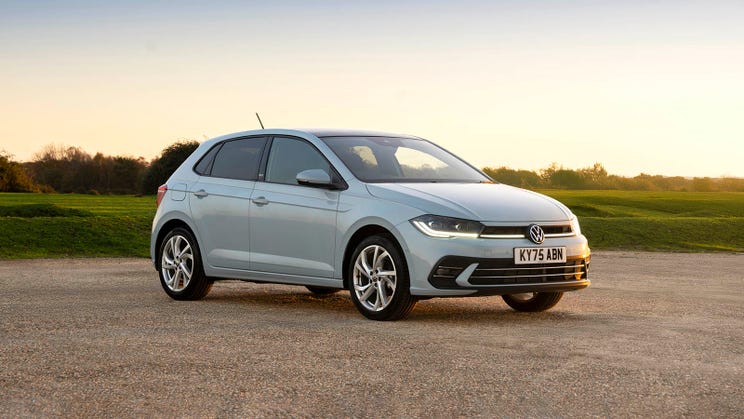







Volkswagen has taken the wraps off the ID. Polo – perhaps its most important electric model to date.
The new Volkswagen ID. Polo is the first electric VW to use a familiar name, but make no mistake – this is very different to the petrol-powered Polo. Volkswagen seems to have pulled out all the stops to ensure this new model is more impressive – and better received – than its previous EV efforts.
When it goes on sale on Thursday 30 July, it’ll be facing off against the Renault 4 and 5, Citroen e-C3, Nissan Micra, Mini Cooper E, Fiat Grande Panda and the Cupra Raval, which shares its underpinnings with the VW.
Volkswagen ID. Polo prices

Three Launch Edition models are initially available; the standard trim levels will replace these from 10 September.
- Life Launch Edition (37kWh battery, 135hp motor): £25,555
- Life Launch Edition (52kWh battery, 211hp motor): £28,830
- Style Launch Edition (52kWh battery, 211hp motor): £32,995
From September, the lineup will expand with an entry-level 116hp Life, which will reduce the starting price to £23,945 – or £25,055 if you go for the 135hp motor. A Life model with the bigger battery will be £500 less than the equivalent Launch Edition. Style trim costs £28,470 with the small battery or £31,745 with the big battery.
Prices for all 52kWh cars include a £1,500 electric car grant.
For comparison, the Citroen e-C3 and Fiat Grande Panda start from under £21,000 but don’t go as far on a charge, while the Renault 5 and Nissan Micra can be bought for under £22,000. A petrol Polo also starts at £22,000; it'll be sold alongside the ID. Polo.
Trim levels

| Life | Style (Life trim plus the following) |
|
|
| Life Launch Edition (Life trim plus the following) | Style Launch Edition (Style trim plus the following) |
|
|
Styling

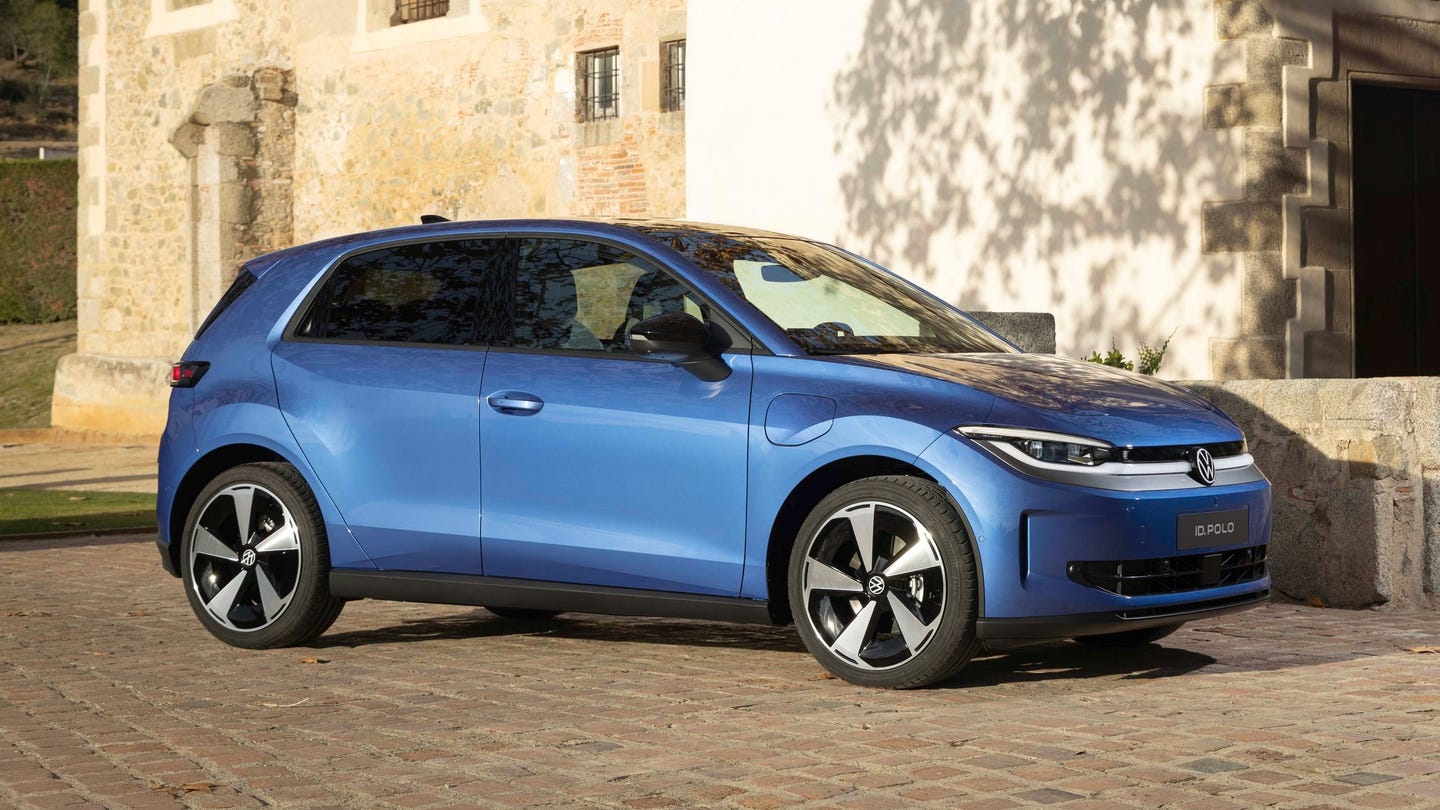
Volkswagen describes the ID. Polo’s design as timeless and clear, which seems accurate. The overall style is smart and chiselled, if perhaps a little conservative next to the Raval and Grande Panda. This is the template that the next generation of VW models will follow.
At the front end, the ID. Polo almost looks like it’s smiling. VW even compares the vertical air vents to dimples – and now we’ve mentioned it, you can see it, can’t you? Top-spec Style cars get a thick lightbar and illuminated VW logo, which is matched at the back between the tail-lights.
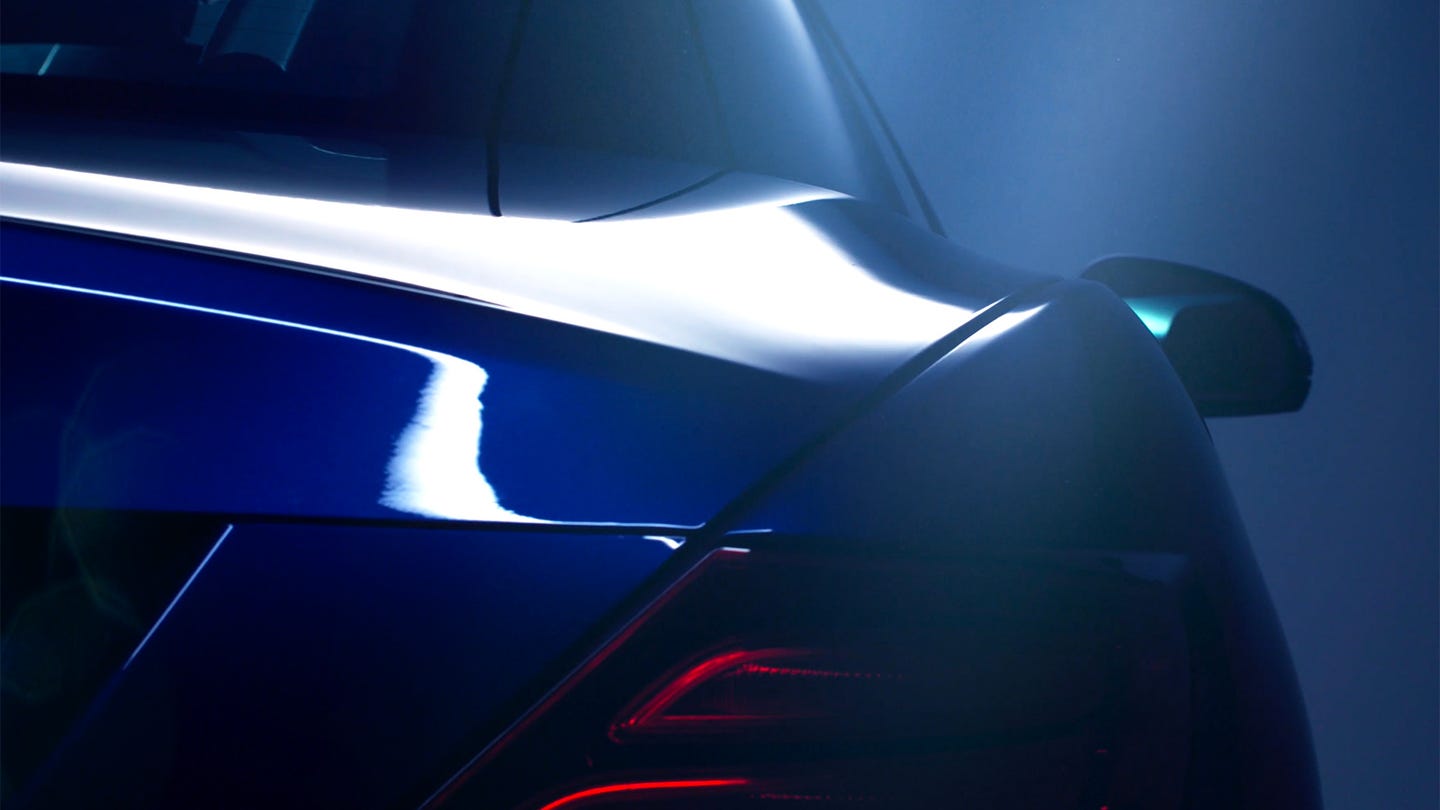
Down the flanks there are prominent wheel arches to suggest stability, plus hidden rear door handles next to a Golf-like rear pillar. Around the back, the high-mounted rectangular tail-lights give the ID. Polo a mini Hyundai Ioniq 5 look.
This Celestial Blue paint colour is one of four metallic options (the others are black, grey and silver), along with red, yellow and white non-metallic hues. Wheels up to 19 inches in diameter will be available.
Interior

The ID. Polo has a thoroughly overhauled interior, which recently debuted in the ID.3 Neo. While a 10-inch digital instrument cluster and a 13-inch touchscreen come as standard, there’s a focus on usability, with a row of elegant keys for the main climate control functions. Quite Skoda-like, these. There are plenty of proper buttons on the steering wheel, largely grouped into cruise control and screen interaction functions. The column-mounted gear shifter frees up space on the centre console, where you’ll find a small but prominent button for adjusting the volume.
In an effort to inject some extra character into the Polo, the digital dials give you the option of a retro themed display. Press the View button on the steering wheel to view a set of dials inspired by later Mark 1 Golf dials – albeit with a power gauge instead of a rev counter.
We’re told that the interior is very high quality – we’ll make up our own mind when we drive the ID. Polo but the car certainly looks premium in these images – and that there’s a lot of sustainably sourced materials. All the fabric bits on the seats, doors, headliner and carpets are made from recycled PET plastic bottles, and top-spec cars come with seats upholstered in Seaqual yarn made from recycled ocean plastic. The speckled white material across the dashboard, which VW calls the ‘Milkyway’ design, is also recycled.
Dimensions

| VW ID. Polo | Existing petrol Polo | |
| Length | 4,053mm | 4,074mm |
| Wheelbase | 2,600mm | 2,552mm |
| Height | 1,530mm | 1,451mm |
| Width | 1,816mm | 1,751mm |
| Boot space (seats up/down) | 441/1,243 litres | 351/1,125 litres |
Despite being shorter than the petrol Polo, the ID. Polo promises to be much more spacious. Rear-seat passengers get extra length, height and width to stretch out in.
Underpinning the ID. Polo is VW’s new MEB+ platform, which puts the motor on the front axle – unlike the ID.3 and related cars, where the motor is rear-mounted. This switch frees up extra boot space, and the ID. Polo’s 441 litres is not only 25% more than a petrol Polo but absolutely class-leading.
Range and performance

The ID. Polo comes with 37kWh and 52kWh batteries, which broadly matches the capacities you get in the Renault 5 and Micra. VW’s batteries offer up to 204 and 282 miles respectively.
You can choose from three power outputs: 116hp, 135hp and 211hp, with the latter being reserved for the larger battery. All have a 99mph top speed.
Some versions of the ID. Polo will even be able to tow a 1,200kg trailer.
The ID. Polo uses MacPherson suspension struts up front and a compact torsion bar at the rear. Interestingly, VW says the ride quality is ‘particularly good’ and ‘significantly superior to its predecessor’. That points to a very impressive and grown-up ride quality, seeing as the current Polo is one of the most mature-feeling superminis.
The braking system leans heavily on energy recuperation, although there are disc brakes front and rear for when you need to stop on a sixpence. We’re told this enables a better brake feel – something we’ve criticised in many VW Group EVs.
Optionally, you can select the new Connected Travel Assist feature (which used to be just called Travel Assist). The latest version of this software recognises red traffic lights and can bring you to a stop automatically. This is part of the new one-pedal driving ability, whereas previously the system would slow you down to a few miles per hour and then you’d have to do the last bit of braking.
Charging

| Battery | 37kWh | 52kWh |
| AC/DC charge rate | 11kW/90kW | 11kW/105kW |
| 10-80% DC charge | 27 mins | 24 mins |
The smaller battery has a lithium-ion phosphate (LFP) makeup, which reduces costs, while the bigger battery is the more energy-dense nickel manganese cobalt (NMC) type.
A 10-80% charge takes 27 minutes for the 37kWh battery and 24 minutes for the 52kWh pack, with the latter helped by a particularly flat charging curve, VW says.
Vehicle-to-Load will be available (the adaptor is an optional extra), letting you charge other electricals from the car’s battery at up to 3.6kW. This could be an e-bike or a coffee maker, for example.
Volkswagen is also offering a city charging tariff, which offers AC charging at €0.39/kWh and is aimed at buyers who don’t have a driveway. We’ll have to wait and see whether this makes it to the UK, but it’s good to see a manufacturer trying to tackle the expensive public charging network – a key barrier to urban EV takeup.
VW ID. Polo GTI

The freshly revealed VW ID. Polo GTI range-topper gets power boosted to 226hp, plus a 'quintessential GTI' feel. It's the first electric VW GTI.
Read more about the new Volkswagen ID. Polo GTI here.
Pick up a pre-owned Polo
If you’d prefer the petrol Polo, you can save thousands versus a new one by shopping for used Volkswagen Polo cars for sale at Motorpoint. Read our Volkswagen Polo review for more info.